View All


 View All


 View All

 View All


 View All

 View All


 View All


 View All

 View All







A member of Sassy Mama team found out she had a half-sister as an adult. Her experience is a candid lesson for parents navigating second families: what not to do and what your kids might actually be feeling.
When families separate and reform, parents face one of the more difficult conversations they will have with their children: telling them about a new partner or a new family. That conversation does not always happen when it should. Even worse, sometimes, it does not happen at all.
Our Team Sassy Mama member, aged 28, is still putting together the full picture of her father’s second family — including a half-sister whose existence she only recently confirmed. Her story tells us what can happen when a parent opts for secrecy and how that decision can follow a child well into adulthood.
Read More: Reclaiming Your Identity After Marriage and Kids
Her parents divorced when she was three. In the years that followed, contact with her father became sparse: an encounter at a grandfather’s funeral or an occasional message. For the better part of two decades, they were mostly strangers.
Some of that distance, she acknowledges, came from her mother’s side. “She was always telling me that she didn’t want me to talk to him,” she recalls. “And when you are just a child, you adopt this mindset because you don’t want to make your mum sad.”
It is a familiar dynamic for many children of divorce, who get caught between two parents and have to absorb the weight of adult conflict they are too young to fully understand.
Read More: Getting Divorced In Hong Kong? These Divorce Lawyers Can Help

The turning point came during a Chinese New Year dinner this year. Her mother, with what she describes as a shift in perspective that came with age, gently suggested she consider reaching out to her father. She did so the following day.
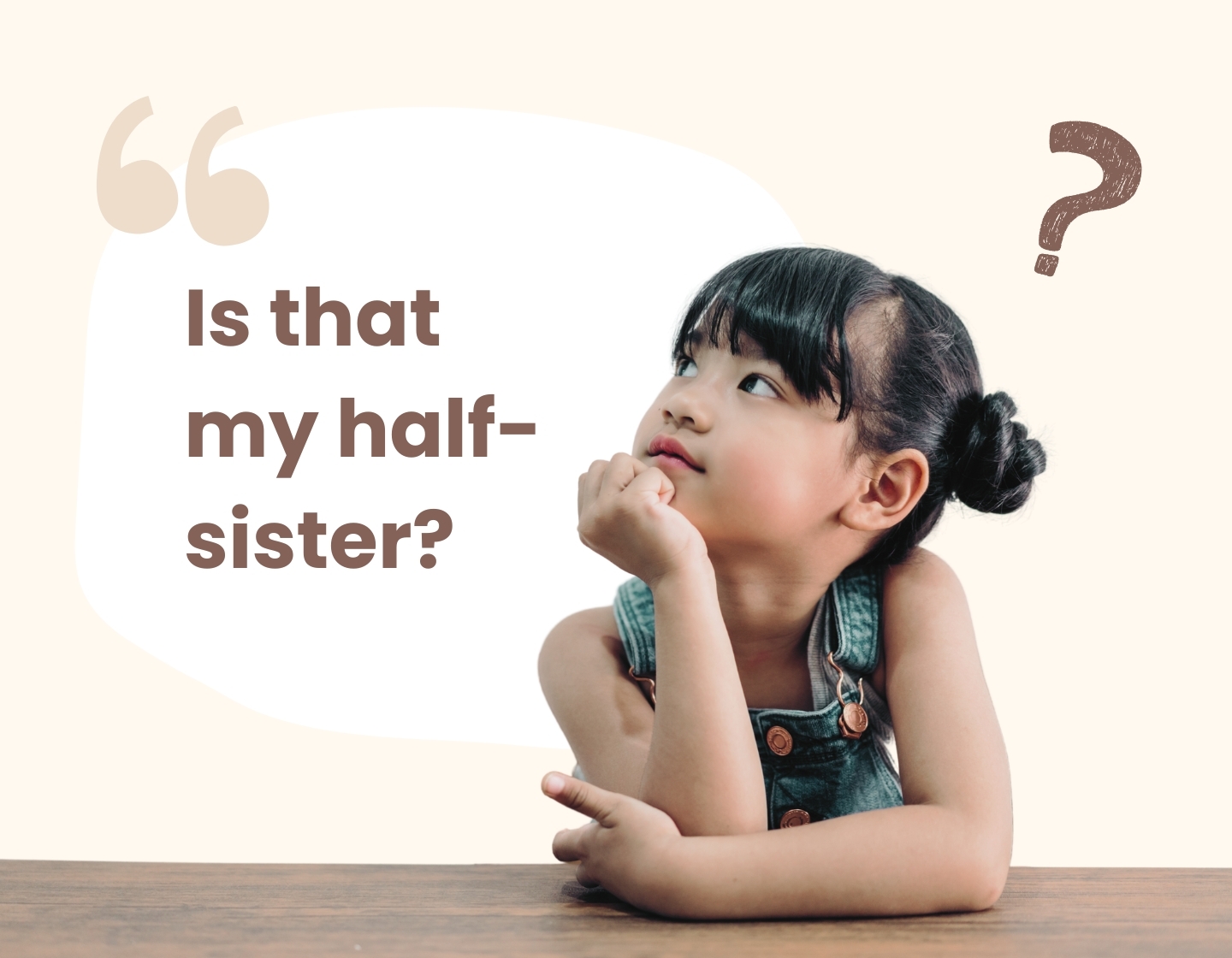
It was then that she noticed something she hadn’t clocked before: her father’s WhatsApp profile picture featured a young girl. She asked him the obvious question: “Is that my half-sister?”
Her father’s response was to ask her to wait until they could meet in person. Her grandmother, when asked, initially refused to say anything; her father had instructed the wider family to stay silent. Eventually, her persistence paid off. Her grandmother confirmed what she had already suspected. She has a half-sister.
Read More: Everything To Know About Getting Married Again
Tellingly, when the answer finally came, her first feeling was of relief. “I always had this question,” she says. “I didn’t know what my dad’s status was, what his life looked like. I’ve always been scared that I might have a half-sibling out there and I would never know they exist.”
It is a detail worth sitting with for any parent managing a blended family situation. The fear of the unknown — of a sibling out there somewhere, of being deliberately kept in the dark about your own family — can take root in a child and stay for years. She did not take issue with the existence of her half-sister. What unsettled her was the secrecy surrounding it.
Read More: Practical Period Advice To Share With Your Teenage Daughters
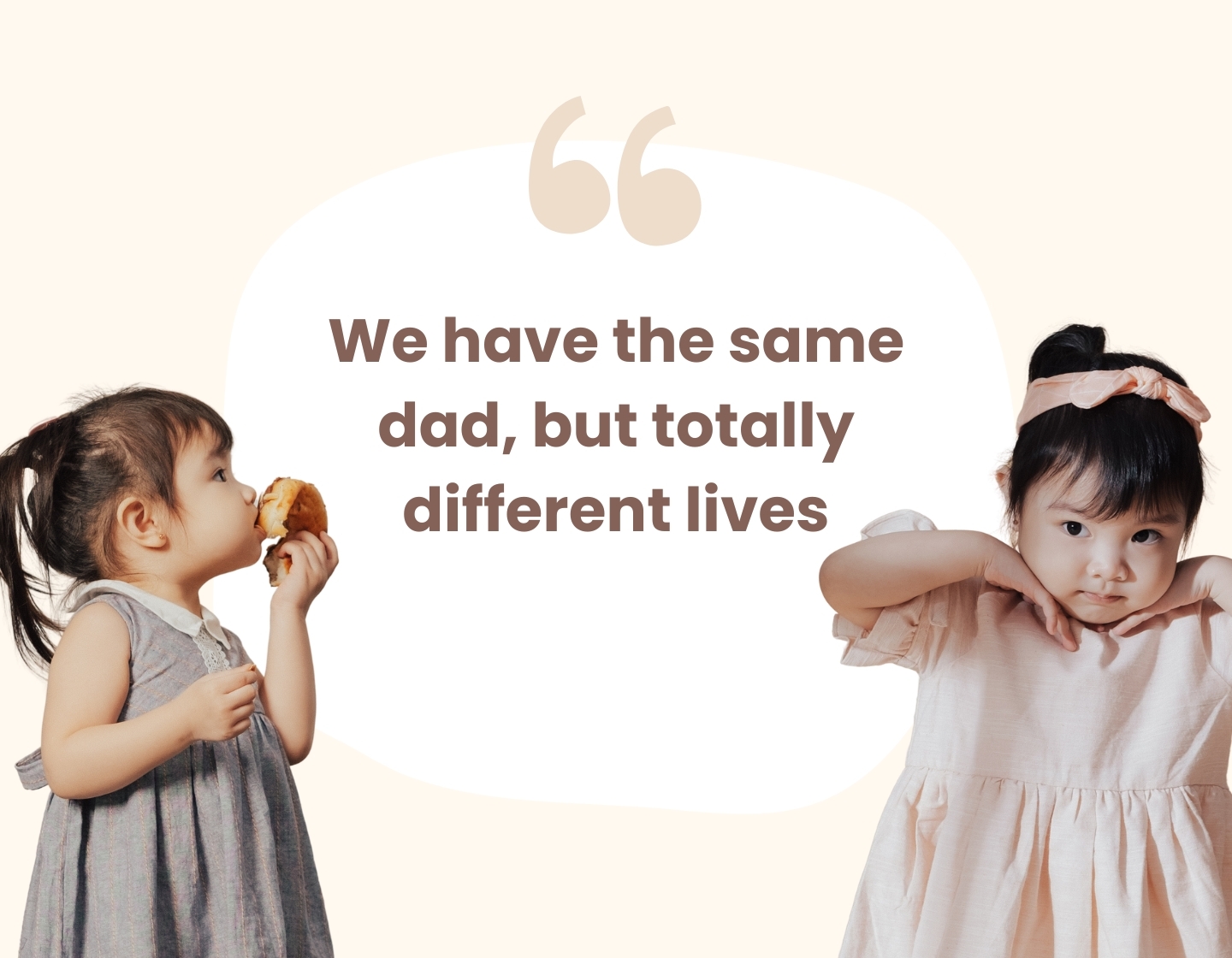
Her account carries another dimension that some children in similar situations may recognise. Through conversations with her grandmother and other relatives, she learnt that her half-sister attends an international school in the Philippines, with her father covering the fees. Her own mother, meanwhile, raised her alone and without any financial support from him.
“That’s one of the reasons my mum really resented him,” she says. “He told her he had no money. My whole childhood, my mum was a single mum working really hard.”
When parents withhold information about second families, children can end up discovering the truth — and also realise that they may have been treated differently.
Read More: A Psychiatrist’s Guide To Speaking With Children About Sexuality & Gender Identity
For parents currently navigating how to talk to their children about a new partner, a step-family or a half-sibling, her experience points to a few things worth considering.
Honesty, delivered carefully, tends to be better than silence. Our team member’s discomfort did not come from learning she had a half-sister. It came from knowing that information directly relevant to her own life had been withheld from her. Children pick up on more than parents often realise — even young children can register tension and evasiveness, and attempts to shield them from information can result in them filling in the gaps themselves, perhaps in ways more distressing than the truth.
Read More: A Mama’s Guide To Understanding PCOS — Symptoms, Diagnosis & Why Early Treatment Matters
And if financial inequality does exist between two families, acknowledging it directly is likely more honest than hoping it goes unnoticed. And whatever a child’s reaction to difficult news — anger, confusion, sadness or quiet relief — that response deserves space and patience.
The broader point is straightforward: children can manage difficult truths more readily than they can manage the feeling of being left out of their own story. If you are working out how to start that conversation, the best thing you could do is simply to begin it.
Read More: Where To Find Counsellors, Psychologists And Therapists In Hong Kong