View All

 View All


 View All


 View All

 View All
 View All

 View All

 View All

 View All





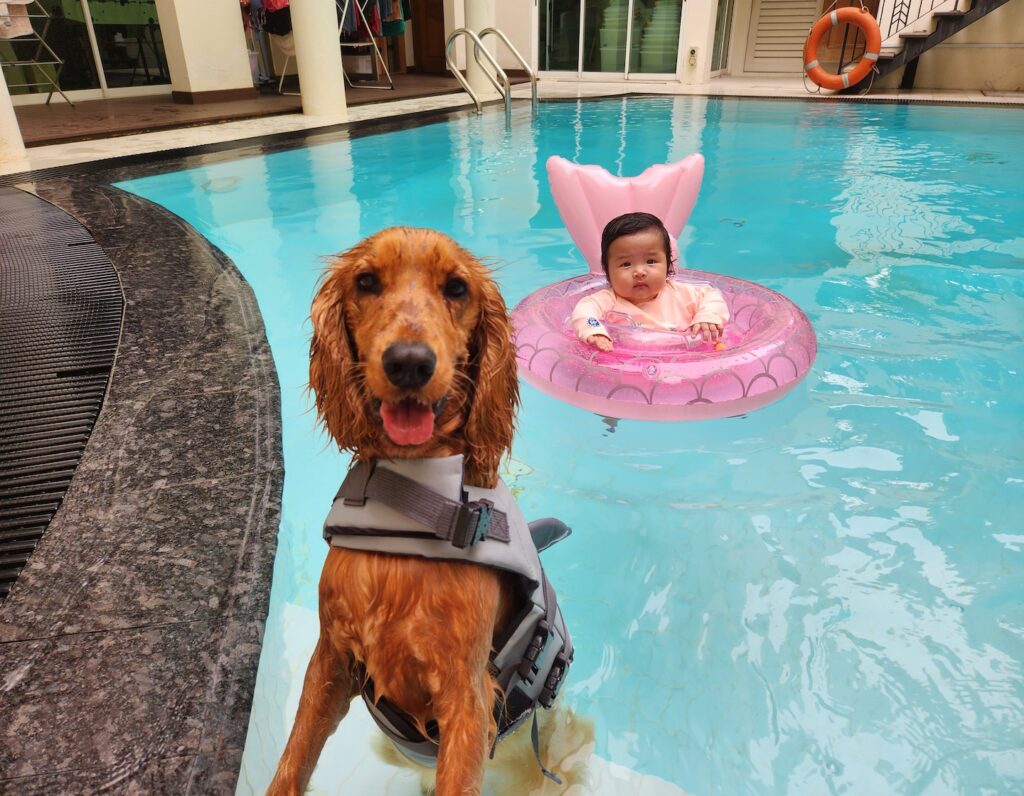
Even if your dog loves kids, it doesn’t hurt to lay down groundwork before the baby arrives. A new baby is a big change for the whole family, including its furriest member! Here’s how to prep your dog for a newborn and keep them both safe.
From significant body changes to surviving on a three-hour sleep cycle, having a baby can turn any mama’s world upside down. Don’t get us started on the mountain of baby bottles and clothes to wash! If you’re also mama to a furbaby, don’t forget that this change is huge for them as well.
If your dog doesn’t take well to the newborn or toddler, don’t despair. Take it from a mama of a nervous dog who isn’t the biggest fan of kids: this doesn’t mean that they will never get along. Your little furry one may just need a bit of help to get ready! Here’s how to get started.
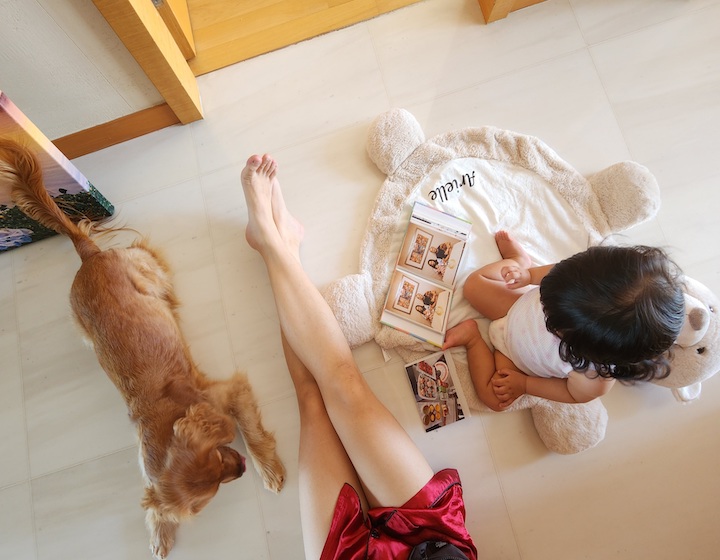
How to prep your dog before the baby arrives
Sound desensitisation
For dogs sensitive to sound, the gamut of new baby sounds will be a lot. Bookmark this Spotify playlist, and play it at a volume that your dog doesn’t react to — and slowly increase it over time to give your dog time to get used to it. Expect your dog to be on high alert the first time you try this, and even for them to race through the house to find out where the sound is coming from!
Involve your partner
Start involving your partner in everything, including your dog’s walks, grooming and more. This will help immensely when you’re tied up pumping or caring for the baby, and also help ease the dog-mum guilt knowing that your dog is in good hands.
Remove small toys that can roll under the sofa
After delivery, most mamas aren’t able to (or shouldn’t!) bend down or sit on the floor. It’s good to remove small toys, especially balls, that can roll under household furniture, so that you won’t be pressured by unrelenting puppy eyes to bend down and retrieve them.
Sassy Tip: Instead, consider giving your dog long-lasting chews, such as kangaroo tails and yak milk chews. These will help occupy them for a long period of time. For added mental enrichment, you can also freeze your dog’s meals in a Kong.
Teach the “leave it” command
Sometimes to a dog, the stinkier a smell the better! That’s why you’ll find them rummaging through the diaper bin and running off with poop-laden diapers. The last thing mamas want to do is to chase after their dog to pry this from their jaws. This is when a solid “leave it” command will come in handy.
Sassy Tip: It’s handy to teach your dog not to jump up when you’re on your nursing chair. You don’t want them jumping up and licking you when you’re trying to breastfeed!
Stroller practice
One of the most helpful things you can do is get a dog accustomed to walking gently beside a stroller at your pace. It might look funny or feel silly, but there’s no harm in practising these walks with an empty stroller.
Read More: Hong Kong Pet Shops — Where to Buy Pet Supplies
How to properly introduce a dog to a new baby
When to bring your dog home
Always have a plan for when you go into labour — either have a prior arrangement at a trusted boarding kennel, or make plans with friends or family who can take your dog for a few days. We recommend that your dog returns home three days after you return home from hospital. Once you’ve settled into a routine, you’ll be in the right headspace to welcome your furry little one home.
The first meeting
Leading up to the first meeting, ensure that your dog has had adequate physical and mental stimulation. Always greet your dog without the baby first. After all, your dog hasn’t seen you for some time, and they’re bound to be super happy and excited! Allow the dog to naturally approach the baby — it’s important for the baby to either be in your arms, or in a cot or stroller, so that you can remain in control of the situation at all times.
Sassy Tip: Give praise whenever your dog approaches the baby, and give treats freely. After all, it’s all about forming positive associations! Remember to use a calm voice and tone at all times to maintain neutrality.
Use natural barriers
When you’d like to stop interaction, refrain from pulling your dog away. This might cause an instinctive predatory reaction or inadvertently give rise to frustration. Instead, use natural barriers like your arms or legs to gently create some distance.
How to deal with protective instincts
Many times, the dog will see the baby as a little extension of their mamas, which is when they naturally start to get a little protective! If you’ve hired a nanny to take care of the child, be sure to hand the baby to the nanny (as opposed to having the nanny take the baby from your arms). It may seem simple but can make all the difference.
Read More: How to Prepare Your Children For the Care Involved in Keeping a Pet

How to ensure safety when your baby becomes mobile
This is when the entire set-up changes. Even if the dog takes well to a newborn, challenges can arise as children start to move more. Toddlers are fast and unpredictable and pretty much on the same eye level. At this stage, management is the name of the game.
Sassy Tip: Do lots of research: we love @dogmeets_baby on Instagram, which offers practical tips and know-how.
Establish safe zones
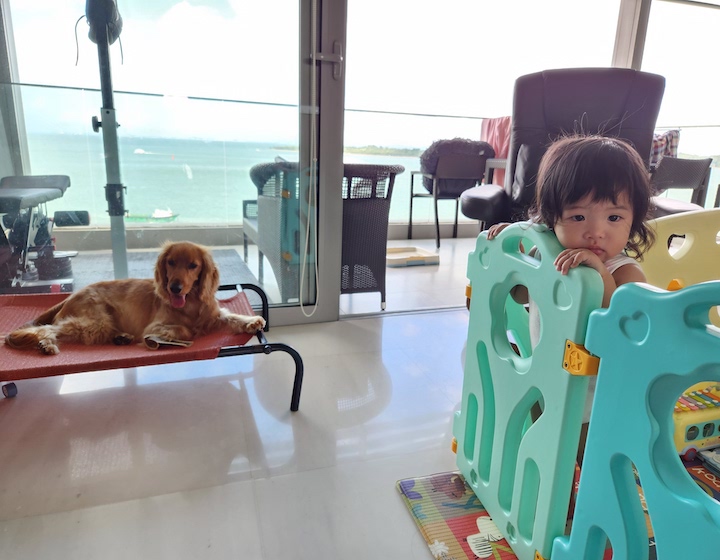
Sometimes, we all (including the dog!) just need a break. Establish safe spaces for everyone to relax — this can look a lot like a playpen for the toddler (which will help to contain all the toys and books too), as well as a no-touch zone for the dog.
Have plenty of baby TV
It’s okay to separate your dog and baby if you need to. This is especially when your dog shows discomfort at this stage; ours started chasing and barking at our baby whenever she moved, so we knew we had to intervene. Set up baby gates, and let the dog watch the baby from a safe distance. This will help the dog get used to the new movements without any pressure to interact.
Have one leg in between at all times
If your dog is okay with your toddler being free on the floor, we recommend still having one leg between both of them at all times. This will help you control the situation if anything happens!
Teach toddlers about the bubble concept
Some dogs may not move when uncomfortable, so it’s our job to educate our toddlers. To ensure safety, teach them that all dogs are in their own bubble. They’re not allowed to enter or burst it on their own, but can call the dog out of the bubble. To make things easier, here’s a nifty visual representation of this concept!
Sassy Tip: Learn to speak your dog’s body language by familiarising yourself with the canine ladder of aggression. Initial signs include yawning, turning their head away or having their ears back. Often if no one listens, the dog is often forced to escalate to barking, snapping, growling or even biting.
Find an activity the whole family can enjoy
Swimming, going to the beach or taking long walks are all great ideas. Try not to only give the dog attention when the baby isn’t around; as it will backfire, causing the dog to only look forward to solo time with its fur-parents. By finding an activity that everyone can enjoy, this will not only form positive associations, but also create precious memories for years to come.
Overall, just give it time. With space, patience and careful management, your dog and baby will grow to become best friends!
Sassy Tip: If your toddler would like to walk the dog, why not have two leashes — one for your toddler, and one for the dog. This will allow you to control your dog’s pace, and ensure that it doesn’t run off with your toddler.